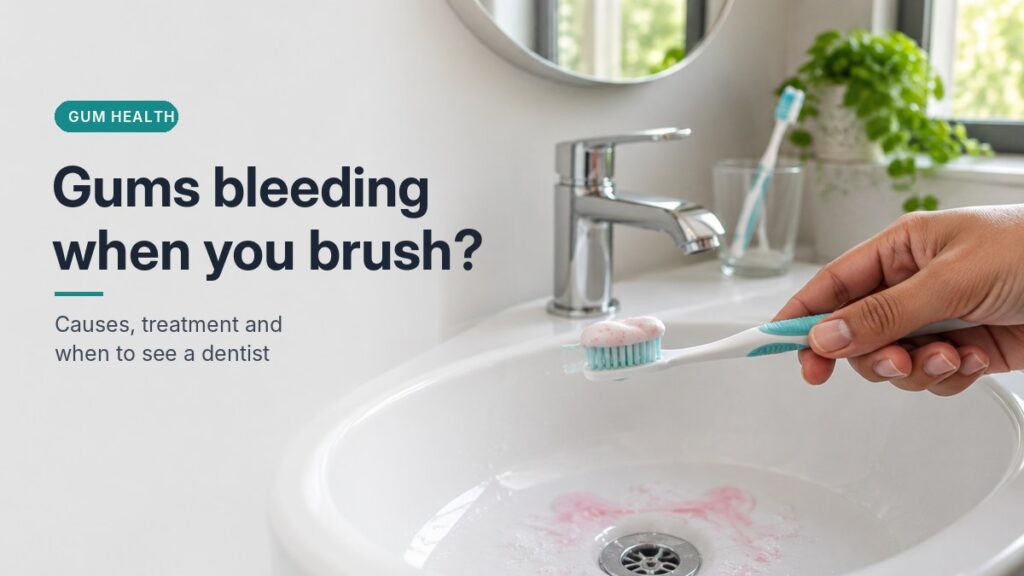
Spotted pink streaks in the sink after brushing? You are not alone. Bleeding gums are one of the most common dental problems, and because they rarely hurt, most people ignore them for months. In most cases, bleeding gums mean your gums are inflamed by plaque building up along the gum line. The good news: caught early, this is usually easy to treat and fully reversible. This guide explains why your gums bleed, how to stop it at home and when to see a dentist.
What Are Bleeding Gums?
The medical term is gingival bleeding: blood coming from the gums around your teeth when you brush, floss or bite into something hard. People often call it teeth bleeding, but the blood almost never comes from the tooth itself. It comes from the soft gum tissue around it.
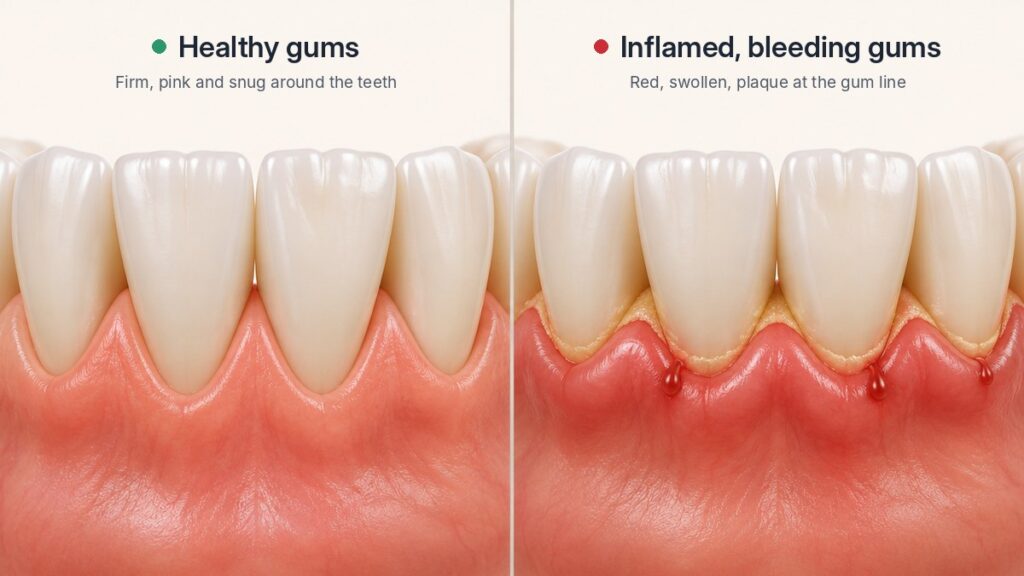
Healthy gums are pink and firm, and they do not bleed when you brush. When bacteria build up along the gum line, the gums become irritated and inflamed. The tiny blood vessels inside them turn fragile, so even a toothbrush bristle or a piece of floss can make them bleed. The most common reason for this inflammation is gingivitis, the earliest stage of gum disease.
Symptoms That Come With Bleeding Gums
Bleeding is usually the first thing people notice. You may also have:
- Swollen and bleeding gums that look red or purplish
- Gums that feel tender and puffy or look shiny
- Bad breath or a bad taste that stays after brushing
- A soft, sticky film (plaque) or hard yellow deposits (tartar) near the gum line
- Gums that seem to be pulling back from the teeth
Minor bleeding with slightly swollen gums usually points to early gum inflammation, which responds well to treatment. If your teeth feel loose or you notice pus around the gums, the problem has gone further and should be checked by a dentist soon.

Common Causes of Bleeding Gums
There is rarely one single cause, and several often overlap. These are the most common gum bleeding causes.
1. Plaque Build-Up and Gingivitis
This is by far the most common bleeding gums reason. Plaque is a sticky film of bacteria that forms on your teeth every day. If it is not cleaned away, it hardens into tartar, which a toothbrush cannot remove. Plaque and tartar irritate the gums and cause gingivitis, the first stage of gum disease. The good part is that gingivitis can be reversed by removing the build-up and keeping the area clean. Left untreated, it can progress to periodontitis, where the gums and the bone that holds the teeth are damaged.
2. Gum Bleeding While Brushing or Flossing
This is the type most people notice first. Gum bleeding while brushing usually points to plaque at the gum line. But brushing too hard or using a hard-bristled brush can also hurt the edges of your gums, and a new toothbrush can cause a little bleeding for the first few days.
If you have just started flossing, some bleeding in the first week is common. Do not stop. It simply means that area needs more attention, and the bleeding usually settles as the gums get healthier.
3. Bleeding Gums During Pregnancy
Bleeding gums during pregnancy are very common. Hormonal changes increase blood flow to the gums and make them react more strongly to plaque, so even a small amount can cause swelling and bleeding. This is often noticed from the second month and usually settles after delivery.
The care is the same: brush gently, clean between your teeth daily and see a dentist. Professional cleaning (scaling) is generally safe during pregnancy. The second trimester is often the most comfortable time for routine dental treatment, and your dentist will plan the timing with you. Occasionally a small red swelling appears on the gum. It is usually harmless and often goes away after delivery, but get it checked.
4. Blood-Thinning Medicines
Some medicines, such as blood thinners, make bleeding more likely. Never stop a prescribed medicine on your own. Tell your dentist which medicines you take, and speak to your doctor before making any change.
5. Diabetes
Diabetes and gum disease affect each other. Diabetes raises the risk of gum infections and slows healing, and gum disease can make blood sugar harder to control. If you have diabetes, regular dental check-ups matter even more. Read more about the link between gum health and overall health.
6. Vitamin C and Vitamin K Deficiency
Bleeding gums due to vitamin deficiency are real but less common. Vitamin C keeps gum tissue strong, and a severe lack of it makes gums swollen, spongy and quick to bleed. Vitamin K helps blood to clot, so low levels can also cause bleeding. A balanced diet with amla, guava, oranges, capsicum and leafy greens covers most people’s needs.
7. Tobacco, Gutka and Smoking
Smoking and chewing tobacco or gutka are major causes of gum disease. Tobacco reduces blood flow to the gums, so smokers often see less bleeding even when their gums are unhealthy. This can hide the problem while it gets worse. If you use tobacco, do not wait for bleeding before getting your gums checked.
8. Blood Disorders
Rarely, bleeding gums can be an early sign of a blood disorder. This usually comes with other signs, such as easy bruising or frequent nosebleeds. If you notice these, see your doctor as well as your dentist.
9. Braces, Dentures and Rough Fillings
Braces, loose or poorly fitting dentures, rough fillings and crowns with overhanging edges trap plaque and irritate the gums. A dry mouth adds to the problem. Your dentist can smooth or adjust them. ## How to Stop Bleeding Gums at Home
To stop your gums from bleeding, you need to remove the plaque causing it. Home care helps mild cases, but it cannot remove tartar that has already hardened.
Daily Steps That Help
- Brush twice a day for 2 minutes with a soft toothbrush and fluoride toothpaste. Angle the bristles towards the gum line and use short, gentle strokes.
- Clean between your teeth once a day with floss, interdental brushes or a water flosser. New to it? Read about the benefits of daily flossing.
- Replace your toothbrush every 3 months, or sooner if the bristles fray.
- Cut down on sugary and sticky foods.
- Stop smoking and chewing tobacco.
- Eat more vitamin C-rich foods such as amla, guava, oranges and capsicum, and drink enough water.
Bleeding Gums Home Remedies
These will not remove tartar, but they can soothe your gums while you improve your cleaning:
- Warm salt-water rinse: Mix half a teaspoon of salt in a glass of warm water and swish it around your mouth for about 30 seconds, once or twice a day. See how a salt-water rinse helps keep dental problems away.
- Gentle pressure: If a spot is bleeding, press a clean, damp piece of gauze on it for a few minutes.
- Soft foods: Avoid very hard, crunchy or spicy foods while your gums are sore.
- Do not be harsh: Do not rub salt, baking soda, charcoal or tooth powder directly on your gums. They scratch and irritate the tissue. Undiluted clove oil can also burn the gums.
Best Toothpaste and Mouthwash for Bleeding Gums
There is no magic toothpaste for bleeding gums, but a few things help:
- Choose a fluoride toothpaste, ideally one made for gum care with anti-plaque or anti-tartar ingredients.
- Avoid very abrasive (gritty) toothpastes, which can irritate sore gums.
- A mouthwash for bleeding gums can help, but it cannot replace brushing and flossing. An alcohol-free antibacterial mouthwash is a good choice, and your dentist may suggest a specific one for a short time.
How Long Do Bleeding Gums Take to Heal?
If plaque and gingivitis are the cause, most people can heal bleeding gums within 1–2 weeks of thorough daily cleaning. If tartar has built up, home care alone will not fix it, because only a dentist can remove tartar. Once it is cleaned off, the gums usually settle within a couple of weeks.
With more advanced gum disease, healing takes longer, and the gums may tighten over several weeks. Bone lost to gum disease usually does not grow back, but treatment can stop it from getting worse.
Bleeding Gums Treatment at the Dental Clinic
Treatment depends on the cause. Your dentist will examine your gums, measure the depth of the pockets around your teeth and may take X-rays. Common treatments include:
Scaling (teeth cleaning): Plaque and tartar are removed from above and just below the gum line with ultrasonic and hand instruments. For most people with gingivitis, professional teeth cleaning (scaling) is the main treatment.
Scaling and root planing (deep cleaning): If the gum pockets are deep or you have early periodontitis, a deeper clean under the gums is needed, and the root surfaces are smoothed so the gums can reattach. It may be done under local anaesthesia, over one or two visits.
Fixing irritants: Rough fillings, overhanging crowns and poorly fitting dentures or appliances that trap plaque are smoothed or adjusted.
Follow-up: Your dentist will check how your gums are healing and advise how often to come back, usually every 3–6 months depending on your gums.
Gums Bleeding for No Reason? When to See a Dentist
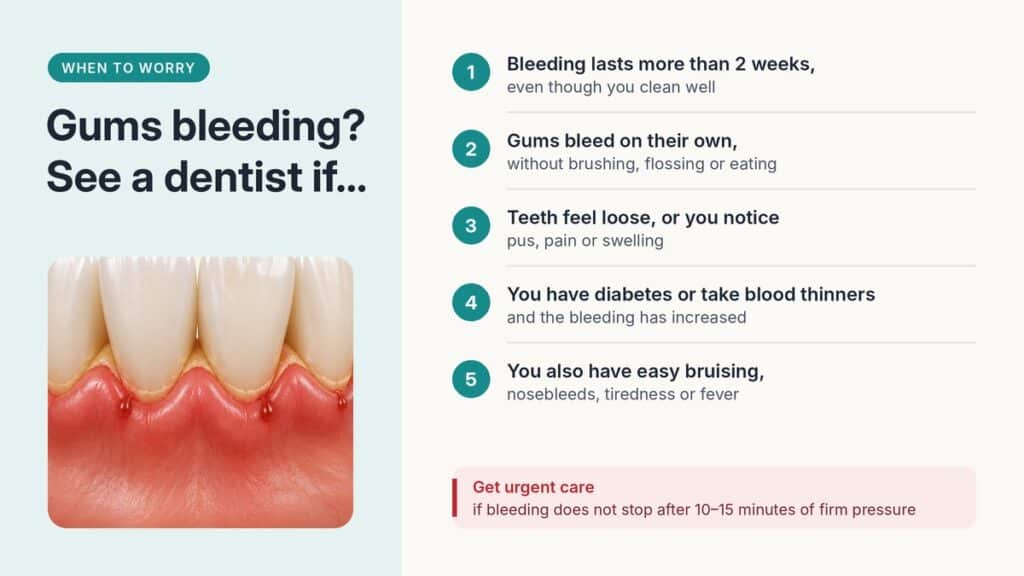
A little bleeding when you brush is common and usually easy to treat. But if your gums are bleeding for no reason, it is time to see a dentist. Book an appointment if:
- Your gums bleed without brushing, flossing or eating, for example at night or with light pressure
- Your gums have bled for more than 2 weeks even though you are cleaning well
- Your teeth feel loose, or you notice pus, severe pain or swelling
- You have diabetes or take blood-thinning medicines and notice more bleeding than usual
- You also have easy bruising, nosebleeds, unexplained tiredness, fever or weight loss
Get urgent care if bleeding in your mouth does not stop after 10–15 minutes of firm pressure.
These signs do not always mean something serious, but they suggest plaque may not be the only cause. A quick check-up can rule out bigger problems. ## How to Prevent Bleeding Gums
Prevention follows the same habits as treatment:
- Brush gently twice a day with a soft brush and fluoride toothpaste
- Clean between your teeth every day
- Cut down on sugar
- Avoid smoking, gutka and other tobacco
- Get a professional cleaning every 6 months, or as your dentist advises, even if you brush well, because tartar can only be removed at the clinic
For more everyday tips, see these 10 simple ways to keep your teeth healthy.
Ready to Get Your Gums Checked?
If your gums have been bleeding for more than a week or two, a dental check-up is the quickest way to find the cause and treat it. At Orthosquare, our dentists check your gums, give you the treatment you need and show you how to brush and floss the right way for your teeth.
Find your nearest Orthosquare clinic and book a gum check-up today.
Frequently Asked Questions
Is it normal for gums to bleed when brushing?
It is common, but it is not normal. Healthy gums do not bleed. Bleeding while brushing usually means plaque has inflamed the gums, and it often settles within 1–2 weeks of better cleaning. If it does not, see a dentist.
Why do my gums bleed when I floss?
Most often because plaque has built up between the teeth and the gums there are inflamed. If you are not used to cleaning these areas, they bleed easily at first. Floss gently every day and the bleeding should stop within a week or two. If it does not, visit a dentist.
Can bleeding gums heal on their own?
Not without better cleaning. Mild bleeding caused by plaque usually improves within 1–2 weeks once you brush and clean between your teeth properly. Tartar cannot be brushed away, so if it has built up, you need a professional cleaning.
Does teeth cleaning (scaling) stop bleeding gums?
Yes, in most cases. Scaling removes the plaque and tartar that irritate the gums. Your gums may bleed a little for a day or two afterwards, which is normal, and then usually settle within a couple of weeks if you keep up good daily cleaning. Deeper gum disease may need scaling and root planing.
Why do my gums bleed in the morning?
Plaque builds up overnight, and your mouth makes less saliva while you sleep. Breathing through your mouth can also dry out the gums. Brushing before bed and cleaning between your teeth should help. If the bleeding continues, get it checked.
Are bleeding gums and bad breath related?
Yes. The bacteria that inflame your gums also produce bad-smelling by-products. Bleeding gums together with bad breath that does not go away are often a sign of gum disease, so see a dentist.
Can diabetes cause bleeding gums?
Not directly, but it raises the risk. Poorly controlled diabetes makes gum infections more likely and slower to heal, which leads to swollen, bleeding gums. Gum disease in turn can make blood sugar harder to control, so looking after your gums is part of managing diabetes.
Which vitamin deficiency causes bleeding gums?
Mainly vitamin C and vitamin K. A severe lack of vitamin C makes the gums swollen and quick to bleed, and vitamin K is needed for blood to clot. Both deficiencies are uncommon in people who eat a balanced diet.
Are bleeding gums during pregnancy harmful to the baby?
Bleeding gums themselves do not harm the baby, and they often settle after delivery. Still, get your gums checked during pregnancy. Some studies have linked severe gum disease with pregnancy complications, although this is not proven, so it is best treated early.

Dr. Chandni
B.D.S and M.D.S graduate