If you have ever looked at a photo and thought “my teeth are crooked”, you are not alone. Crooked teeth are among the most common dental problems, and very few people have perfectly straight teeth. The good news is that crooked teeth can be straightened at almost any age, as long as your gums and the bone around your teeth are healthy. This guide explains what crooked teeth are, what causes them, when they cause problems and how to fix crooked teeth with braces, clear aligners and other treatments, so you can choose the right option with your orthodontist.
What Are Crooked Teeth?
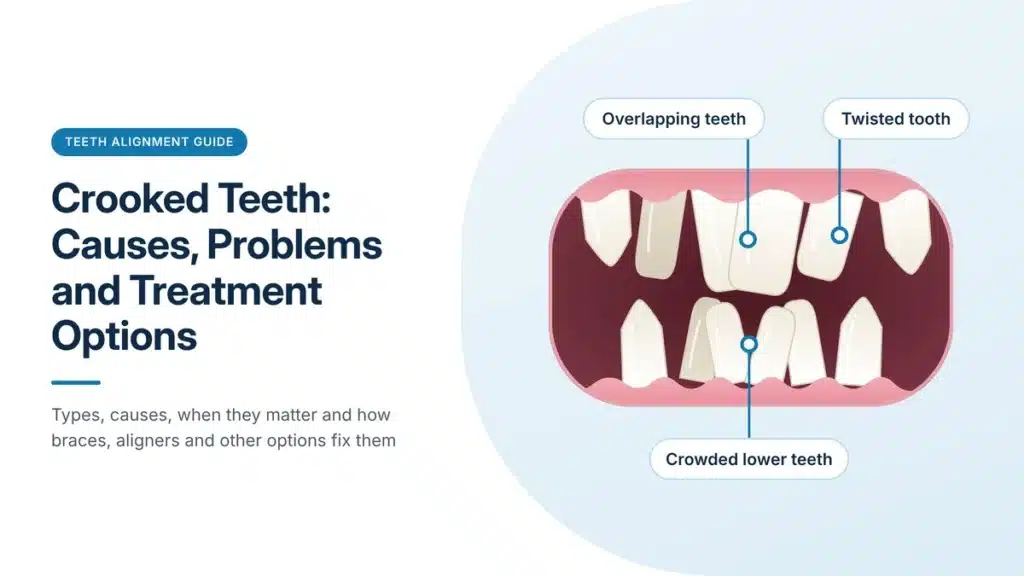
Crooked teeth, also called misaligned teeth or uneven teeth, are teeth that do not sit in a smooth, even curve along the jaw. When the misalignment also affects how your upper and lower teeth meet, dentists call it a malocclusion, or a “bad bite”. It can involve one tooth, a few teeth or the whole jaw.
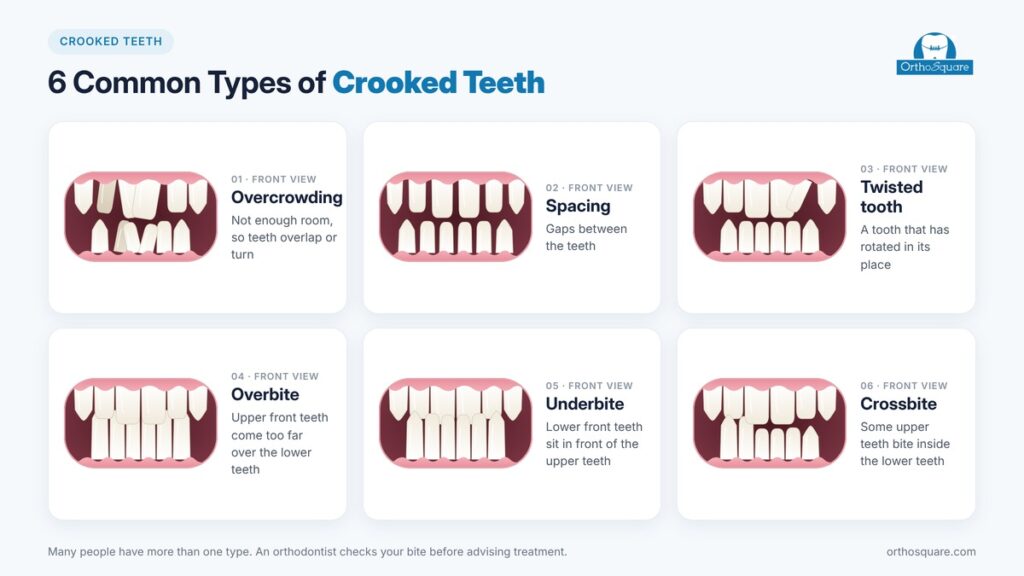
Orthodontists group crooked teeth into a few common types:
- Overcrowding: the jaw does not have enough room, so the teeth overlap or turn. This is also called crowded teeth.
- Spacing: gaps between the teeth, usually because the teeth are small or the jaw is wide.
- Twisted tooth: a tooth that has rotated in its place.
- Overbite: the upper front teeth stick out too far over the lower teeth.
- Underbite: the lower front teeth sit in front of the upper teeth.
- Crossbite: some upper teeth bite inside the lower teeth.
Many people have more than one of these. Your orthodontist first checks which type you have, and then advises the right misaligned teeth treatment.
Crooked Front Teeth vs Crooked Bottom Teeth
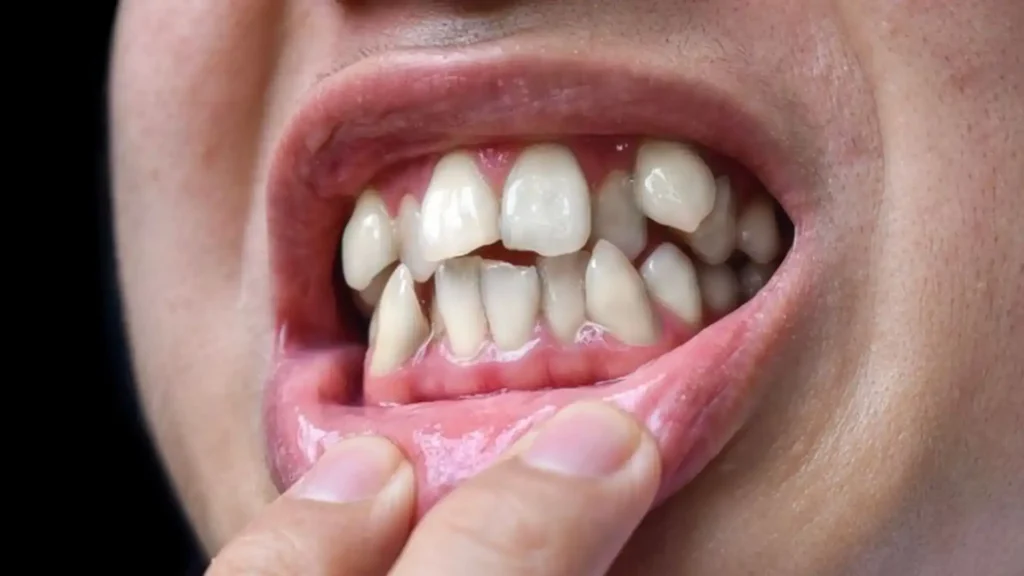
Crooked front teeth are the most noticeable because they show when you smile, so uneven front teeth are often what makes people look for treatment. Crooked bottom teeth, or crooked lower teeth, are just as common but easier to miss. The lower front teeth often crowd slowly with age, even in people whose teeth were straight as teenagers. Upper and lower teeth are treated in the same way, with braces or aligners.
What Causes Crooked Teeth?
What causes crooked teeth is usually a mix of things you inherit and things that happen as you grow. There is rarely one single reason. The main crooked teeth causes are:
- Genetics and jaw size: you inherit the size of your jaw and teeth from your parents. The most common cause of crooked teeth is a jaw that is too small for the teeth, which leads to crowding.
- Early loss of milk teeth: if a milk tooth is lost too early because of decay or injury, the nearby teeth can drift into the space and block the adult tooth. Learn more about milk teeth and permanent teeth.
- Thumb sucking and pacifier use: long-term thumb sucking can push the upper front teeth forward and change the shape of the jaw.
- Mouth breathing and tongue thrusting: these habits can change how the jaw grows and put pressure on the teeth.
- Injury: a blow to the mouth can push a tooth out of place.
- Gum disease and tooth loss in adults: when the gums and bone weaken, or a tooth is lost, the remaining teeth can shift into the gap.Here is what happens when a missing tooth is not replaced.
In short, the main crooked teeth reasons are genetics and jaw size, with habits, injury and tooth loss adding to them.
Do Crooked Teeth Cause Problems?
Slightly crooked teeth do not always cause problems. But crooked teeth can affect your oral health, especially when the misalignment is more severe. The common problems are:
- Harder cleaning: overlapping teeth trap food and plaque, which raises the risk of tooth decay and gum disease. Gums that bleed when you brush are an early warning sign; here is what causes bleeding gums.
- Wear and chipping: when the bite is uneven, some teeth take more force. Over time they can wear down, chip or even loosen.
- Chewing: a poor bite can make chewing less efficient.
- Jaw discomfort: some people with a poor bite get jaw pain, though not everyone does.
- Speech: crooked teeth or large gaps can affect how you say some sounds.
- Confidence: many people avoid smiling in photos because of their teeth.
How to Fix Crooked Teeth
Can crooked teeth be fixed? Yes. Crooked teeth in adults can be treated in the same way as in teenagers. As long as your gums and bone are healthy, teeth can be moved at any age, and adults can have braces too.
Orthodontic treatment starts with a check-up. Your orthodontist examines your teeth and bite, and usually takes X-rays or a digital scan. The best way to fix crooked teeth depends on how severe the problem is, your bite, your age and what matters to you, such as how visible the treatment is.
Teeth Alignment and Teeth Straightening Options
Most teeth alignment treatment works by putting gentle, steady pressure on the teeth so they move into place over time. These are the main teeth straightening options.
Braces for Crooked Teeth
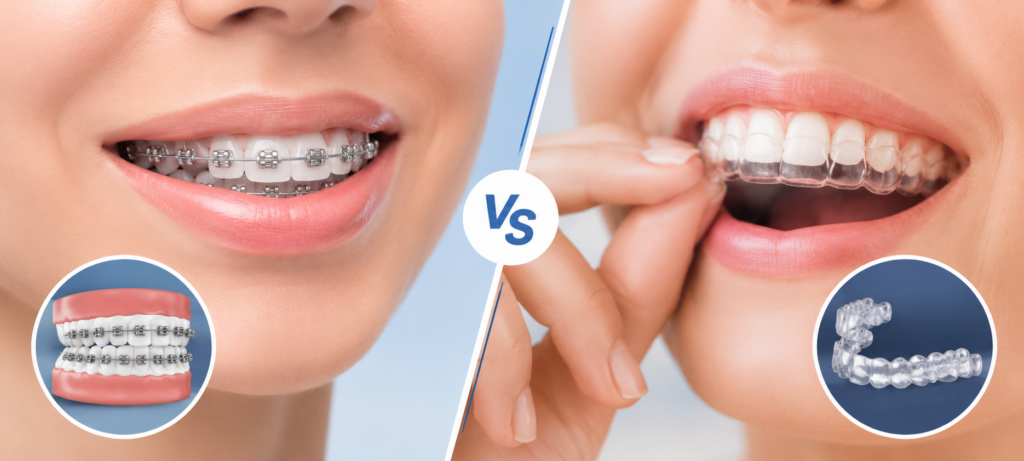
Braces are the best-known crooked teeth treatment and work for almost every case, including complex ones. Small brackets are fixed to the teeth and joined by a wire that guides them into position. Metal braces and ceramic braces, which are tooth-coloured, are both available; compare them in our guide to the types of braces.
Crooked teeth braces suit severely crooked teeth, rotated teeth and bite problems. Because they are fixed in place, they work all day, every day. Fixed braces usually stay on for one to two years. Learn more about braces treatment at Orthosquare.
Aligners for Crooked Teeth: Teeth Straightening Without Braces
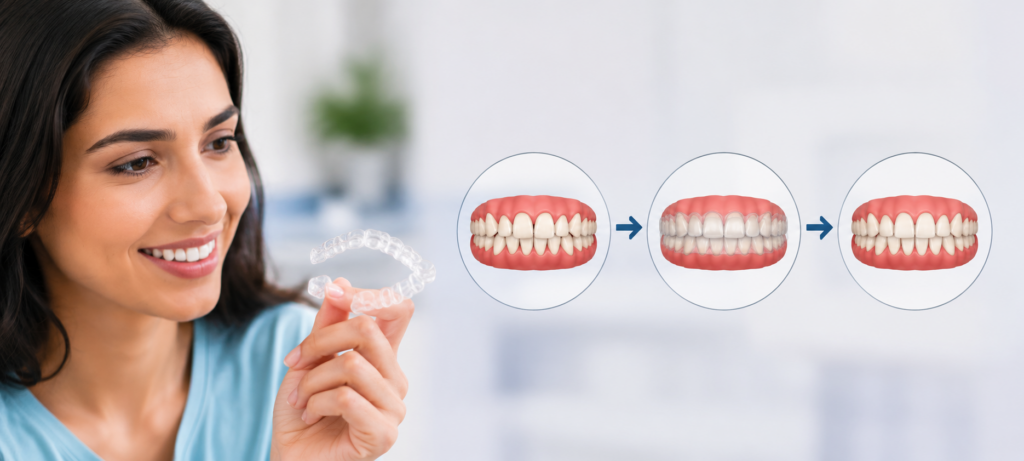
If you want teeth straightening without braces, clear aligners are a popular choice. They are thin, clear trays that you change every couple of weeks, and each set moves your teeth a little. They are hard to notice and you can take them out to eat and brush, which is why many adults prefer aligners for crooked teeth. Aligning teeth without braces works for most mild to moderate cases, but the aligners need to be worn for most of the day. See how clear aligners work, or explore clear aligners at Orthosquare.
Veneers and Dental Bonding for Crooked Teeth
Veneers for crooked teeth are thin shells fixed to the front of the teeth to change how they look. Dental bonding for crooked teeth uses tooth-coloured resin to reshape a tooth. Both can quickly hide minor unevenness, but neither one moves your teeth, and porcelain veneers need some enamel to be removed first.
So veneers and bonding suit small cosmetic concerns, not bite problems or very crooked teeth. Read about dental bonding at Orthosquare, or see how veneers fit into smile correction.
Jaw Surgery
When the jaw itself is badly out of line, braces alone may not be enough. In these rare cases, jaw surgery is done along with braces to correct the bite. It is kept for severe bite problems, and your orthodontist will discuss it with you only if you need it. Here is more on whether braces can fix an asymmetrical face.
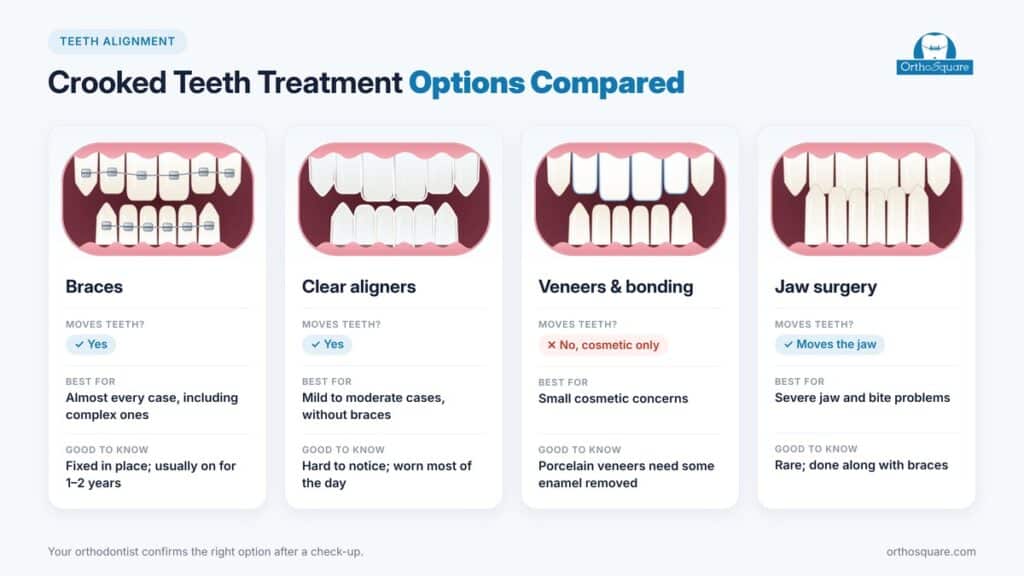
Which Crooked Teeth Treatment Is Right for You?
There is no single best treatment for everyone. This table shows the options that usually suit each case; your orthodontist will confirm what is right for you.
| Your case | Usually suitable | Good to know |
| Slightly crooked teeth | Clear aligners or braces; veneers or bonding if the concern is only how the teeth look | Veneers and bonding do not move teeth |
| One crooked tooth | Aligners or partial braces; bonding if the problem is the tooth’s shape | Your bite is checked before choosing |
| Extremely crooked teeth | Braces, sometimes with tooth removal or other procedures | Severe crooked teeth take longer to correct |
| Bite problems (overbite, underbite, crossbite) | Braces or aligners; jaw surgery in rare, severe cases | Bite correction needs a full assessment |
The cost of treatment depends on the option you choose and how complex your case is. For braces, see our guide to braces cost in India. The clear aligners cost depends mainly on how many aligners your treatment needs.
Keeping Your Teeth Straight After Treatment
Teeth naturally try to move back after treatment. This is why some people find their teeth crooked after braces, usually because they stopped wearing their retainer. A retainer holds your teeth in their new position while the bone and gums settle around them. It is often worn full-time at first and then only at night. Many orthodontists advise wearing it at night for the long term, and following that advice is the best way to keep your results.
Frequently Asked Questions
Q1. What causes crooked teeth?
Usually genetics: a jaw that is too small for the teeth is the most common cause. Habits such as thumb sucking and mouth breathing, early loss of milk teeth, injury and tooth loss can add to it.
Q2. Can crooked teeth be fixed without braces?
Often, yes. Clear aligners can straighten mildly and moderately crooked teeth without braces. Veneers and dental bonding can improve how teeth look, but they do not move the teeth. Severely crooked teeth usually need braces.
Q3. Are crooked teeth bad for your health?
Not always. Slightly crooked teeth may cause no problems. But crowded or poorly aligned teeth are harder to clean, which raises the risk of tooth decay and gum disease, and a poor bite can wear teeth unevenly.
Q4. Can adults fix crooked teeth?
Yes. Teeth can be moved at any age if the gums and bone are healthy. Adults can have braces or clear aligners, and many do.
Q5. How long does it take to straighten crooked teeth?
It depends on the case. Minor problems can be corrected in a few months, while complex cases can take a year or more. Fixed braces usually stay on for one to two years.
Q6. Braces or aligners: which is better for crooked teeth?
Neither is better for everyone. Braces can treat almost every case, including complex ones. Aligners suit most cases and are much less noticeable. Compare the two in our guide to braces vs aligners.
Q7. Can teeth become crooked again after treatment?
Yes. Teeth tend to move back after treatment, especially if the retainer is not worn as advised. Wearing your retainer is the best way to keep your teeth straight.
Get Your Crooked Teeth Checked
Crooked teeth are not only about looks. They can make cleaning harder, wear your teeth unevenly and, over time, affect your gums and bite, even if you brush well. The right treatment depends on your teeth and your bite, so the first step is a check-up with an orthodontist.
Book a free consultation at your nearest Orthosquare clinic to find out which treatment suits your teeth.

Dr. Chandni
B.D.S and M.D.S graduate