Introduction
Most people don’t really think about how teeth move, until they’re told they need to straighten them. And then the question naturally follows: how do aligners work, and are they actually doing something effective… or just sitting on the teeth?
It’s a fair doubt.
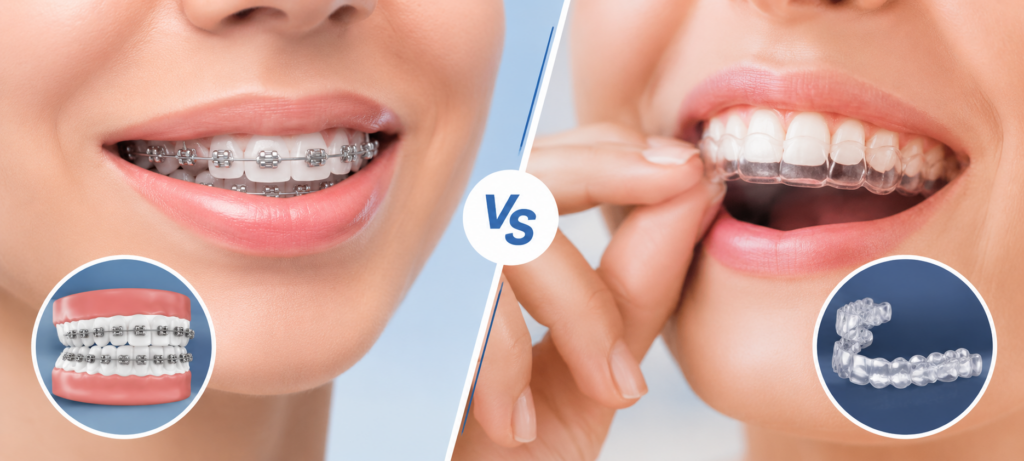
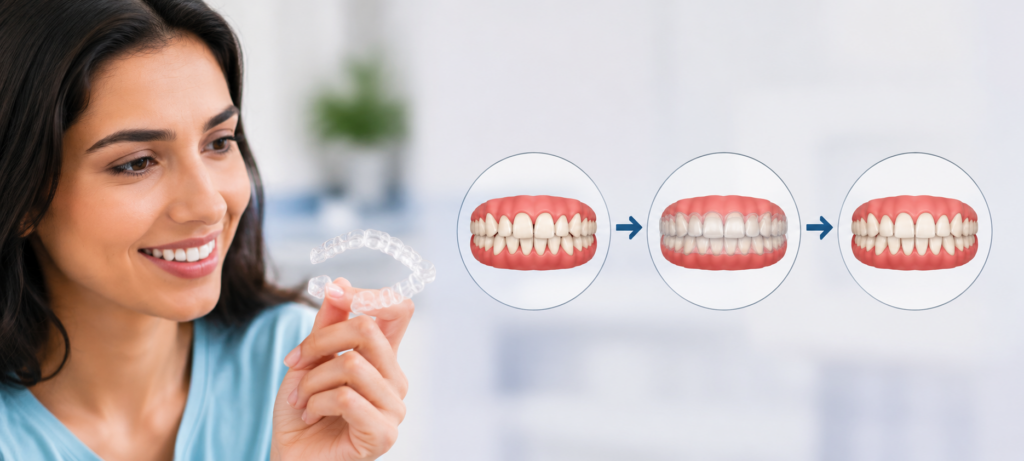
This is because, in contrast to the metal braces, the process through which the wires and brackets exert their pressure on the teeth is highly visible. The same cannot be said about the aligners, as they appear to be rather inconspicuous; however, this is not necessarily the case.In reality, all of the changes that occur due to the use of aligners can be easily explained.They operate by gradually moving the teeth to a certain location according to the previously developed plan.
How do aligners work?
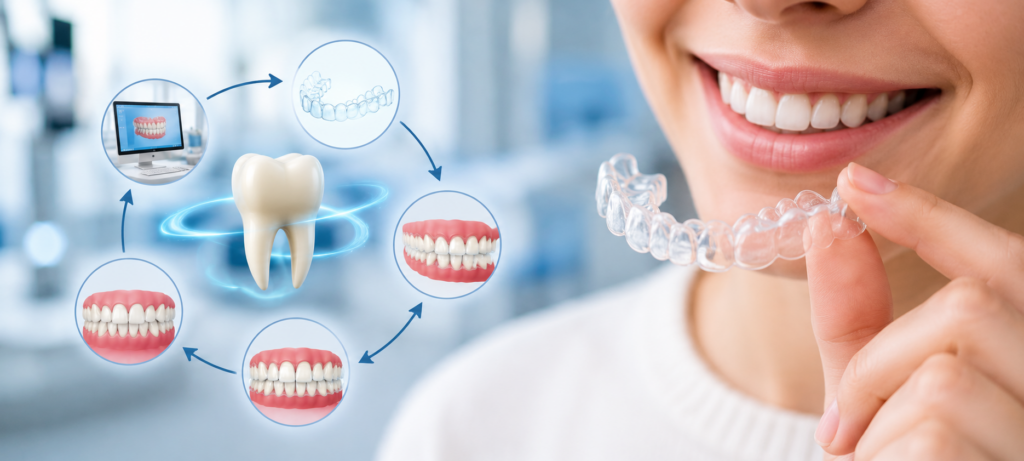
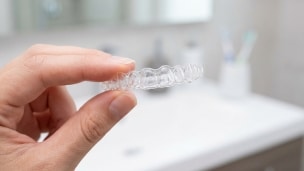
In essence, the process of using aligners is a form of controlled tooth movement.Each successive aligner is designed in such a way that it exerts pressure on specific teeth.But here’s the important part, it’s not forceful movement, it’s planned movement.Your teeth are guided through a sequence, not pushed all at once.That’s why consistency matters. Aligners only work when they’re worn for the recommended time i.e usually around 20–22 hours a day.
The science behind orthodontic tooth movement
To understand how do aligners work, we need to understand the science behind orthodontic tooth movement, So, let’s look at what’s going on inside your mouth another way.
Rather than being cemented into your jaws, your teeth are held in place by tissues that allow for very small amounts of movement when force is placed on them.
- Force applied acts as pressure to one side of the tooth
- The bone on this side remolds over time
- Bone tissue grows up on the other side
Thus, the tooth can move gradually without harming you. People always think that their teeth are being moved by force, but they forget that they have to get used to this too.
That is why an orthodontic procedure takes time and patience.
Step by step process of aligner treatment
Understanding the journey makes the treatment feel much more predictable.
1. Consultation and assessment
Everything begins with evaluating your teeth and bite.
Your dentist or orthodontist checks:
- Alignment issues
- Spacing or crowding
- Overall oral health
2. Digital scan and treatment planning
Instead of traditional impressions, a digital scan is usually taken.
This allows:
- A 3D model of your teeth
- A preview of how your teeth will move
- A step by step treatment plan
This is where the skill of the orthodontist comes in: your entire journey is mapped and visually depicted before it even begins.
3. Custom aligner fabrication
Based on the plan:
- A series of aligners is created
- Each aligner represents one stage of movement
4. Wearing the aligners
You wear each aligner for about:
- 1–2 weeks
- 20–22 hours daily
Small movements happen with each set.
5. Progress tracking
Regular check-ups ensure:
- Teeth are moving as planned
- Adjustments are made if needed
6. Completion of treatment
Once all aligners are used:
- Teeth reach their final position
- Retainers are given to maintain results
Do aligners hurt?
This is one of the most honest concerns patients have.
The answer is : not exactly pain, but you will feel pressure.
When you switch to a new aligner:
- You may feel tightness
- Slight discomfort for a day or two
This is actually a sign that the aligners are working.
Most people describe it as:
- Mild pressure, not sharp pain
- Temporary and manageable
Compared to braces, there are:
- No wire pokes
- No bracket irritation
So overall, aligners are considered more comfortable.
Are aligners effective?

Aligners are often wrongly believed by many people to only be appropriate for minor adjustments. Aligners can be used to correct many issues other than small ones.
But actually, they can treat:
- Mild to moderate crowding
- Spacing issues
- Certain bite problem
What determines effectiveness?
- Case complexity
- Treatment planning
- Patient consistency
The biggest factor is wear time.
Even the best aligners won’t work properly if they’re not worn consistently.
Where they may not be ideal
For very complex cases:
- Severe rotations
- Major bite corrections
Traditional braces or hybrid treatment (initially treated starts with braces for a couple of months then aligners) may still be preferred.
Why are aligners faster than braces?
This is something many patients are curious about.
Why aligners can be faster ?
- Pre-planned digital movement
- No need for manual wire adjustments
- Continuous progression through aligners
So, are aligners actually faster?
The answer is : sometimes, yes.
But there’s a catch
Aligners depend on discipline.
If you:
- Remove them frequently
- Don’t wear them long enough
Treatment can slow down.
What happens after treatment?
Many people think treatment ends once aligners or braces are done but there’s one more important step.
Retention phase
After alignment:
- Teeth have a tendency to shift back
- Retainers are given to maintain position
Why retainers matter?
Without retainers:
- Teeth may gradually move
- Results may not last
Wearing retainers
- Initially worn full-time
- Later reduced to night-time wear
This step is just as essential as the treatment process itself.
Realistic view:
- Aligners aren’t quick-fix tools; rather, they’re used for controlled gradual movements
- They move teeth, don’t force them into place
- Consistency is what matters most
And above all, success depends on adherence to the treatment schedule, not speeding things up
One thing that should be remembered:
In light of their growing popularity, it can easily be thought that aligners are a universal treatment tool.
But, the reality is that teeth alignment treatment involves careful and accurate planning
Thus, it is important to:
- Get a proper assessment
- Follow a professionally guided treatment plan by an orthodontist
However, it is important to note that the method of functioning for such braces relies not only on the trays used, but on how properly the procedure is designed.
Conclusion
The comprehension of how aligners function completely changes your approach to the treatment.It is more than wearing clear trays for some period of time, rather it is a process of gradual movement of your teeth through the carefully thought out stages.In spite of the fact that each movement seems small, all of them accumulate, creating an effect which is truly noticeable over time. By following the instructions, one can easily get his/her teeth aligned without interfering with his/her lifestyle.

Dr. Chandni
B.D.S and M.D.S graduate